The Art of Gentle Detangling for Calm Mornings
I have always believed that detangling the hair is a small morning ritual that shapes the energy you carry into your day. When done softly, detangling eases not only the knots in your hair but also the subtle tension gathering in your shoulders, your breath, and your thoughts.
There were mornings in the past when I rushed through detangling, tugging through knots with unnecessary force, feeling the stress of the day before it had even begun. My scalp felt tight, my hair looked distressed, and my mind remained hurried long after I had finished.
It took time, reflection, and a deeper understanding of slow beauty for me to realize that detangling is not something to be conquered. It is something to be approached the way you might approach a quiet conversation: attentive, patient, and deeply present.
Now, gentle detangling has become one of my favorite morning rituals. It offers a moment of pause, a chance to reconnect with the body before facing the world. It transforms the beginning of the day into something calmer, lighter, and more aligned with ease.
Why Gentle Detangling Matters More Than You Think
The way you detangle your hair affects far more than the strands themselves. When approached with kindness, detangling becomes:
- a grounding ritual that steadies your breath
- a moment of self-connection before the day’s noise begins
- a chance to release physical tension stored in the scalp
- a reminder that beauty can be calm rather than rushed
- an opportunity to influence the rest of your day with softness
Harsh detangling contributes to breakage, frizz, and unnecessary stress on the hair. Gentle detangling, however, brings awareness into the morning, allowing the hair and you to begin the day without strain.
The more softly you handle your hair, the more softness you invite into your life.
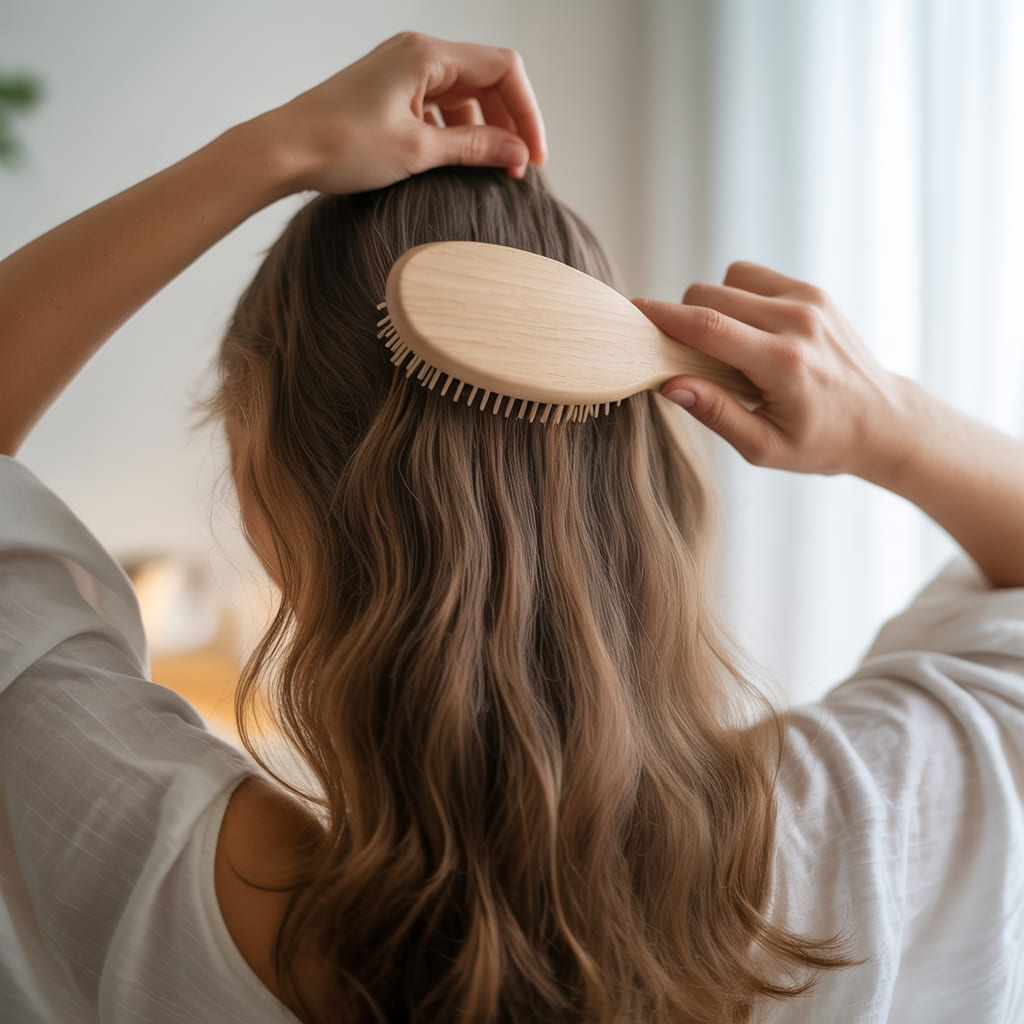
Assessing Your Hair’s Needs With Gentle Curiosity
Hair behaves differently each morning. Some days it wakes up light and airy. Other days it feels dense, tangled, or slightly uncooperative. Instead of becoming frustrated or jumping straight into brushing, pause for a moment and simply observe what your hair is asking for.
Ask yourself:
- Does my hair feel dry or soft today?
- Are the tangles mostly at the ends or throughout the length?
- Does my scalp feel relaxed or a little tender?
- Would my hair prefer finger-detangling before a brush?
This curiosity helps you approach detangling as a responsive ritual rather than a rigid task.
Your hair will always tell you what it needs when you listen gently.
Using Your Fingers as the First Point of Contact
There is something deeply comforting about beginning detangling with your fingers instead of a tool. Fingers can sense resistance, tenderness, and movement in a way no brush can.
They allow you to separate strands without pulling, giving you a chance to guide your hair into alignment before introducing any brushes or combs.
To finger-detangle softly:
- Start with the ends, gently loosening small knots with slow, careful movements.
- Work upward, inch by inch, releasing tangles without force.
- Allow the hair to slip naturally through your fingers rather than gripping tightly.
This method creates a sense of intimacy and connection, helping both you and your hair ease into the morning.
The Tenderest Approach to Knot Release
One of the kindest ways to detangle hair is to start at the very ends, where the strands are most delicate. The ends often carry the softest whispers of your hair’s history: dryness from past seasons, residue from sleep, or tangles formed during the quiet movements of the night.
Begin by:
- holding a small section of hair near the bottom
- gently brushing or combing the tiny knots at the ends
- moving upward only when the lower section feels smooth
- repeating this process throughout the hair
This step prevents breakage and eliminates the force that often comes from brushing top-to-bottom in one motion. When you tend to the ends first, the rest of your hair follows with ease.
Gentle beginnings create gentle outcomes.
Choosing Tools That Support Softness
The tools you choose for detangling influence the entire experience. Soft tools invite softness. Harsh tools invite tension.
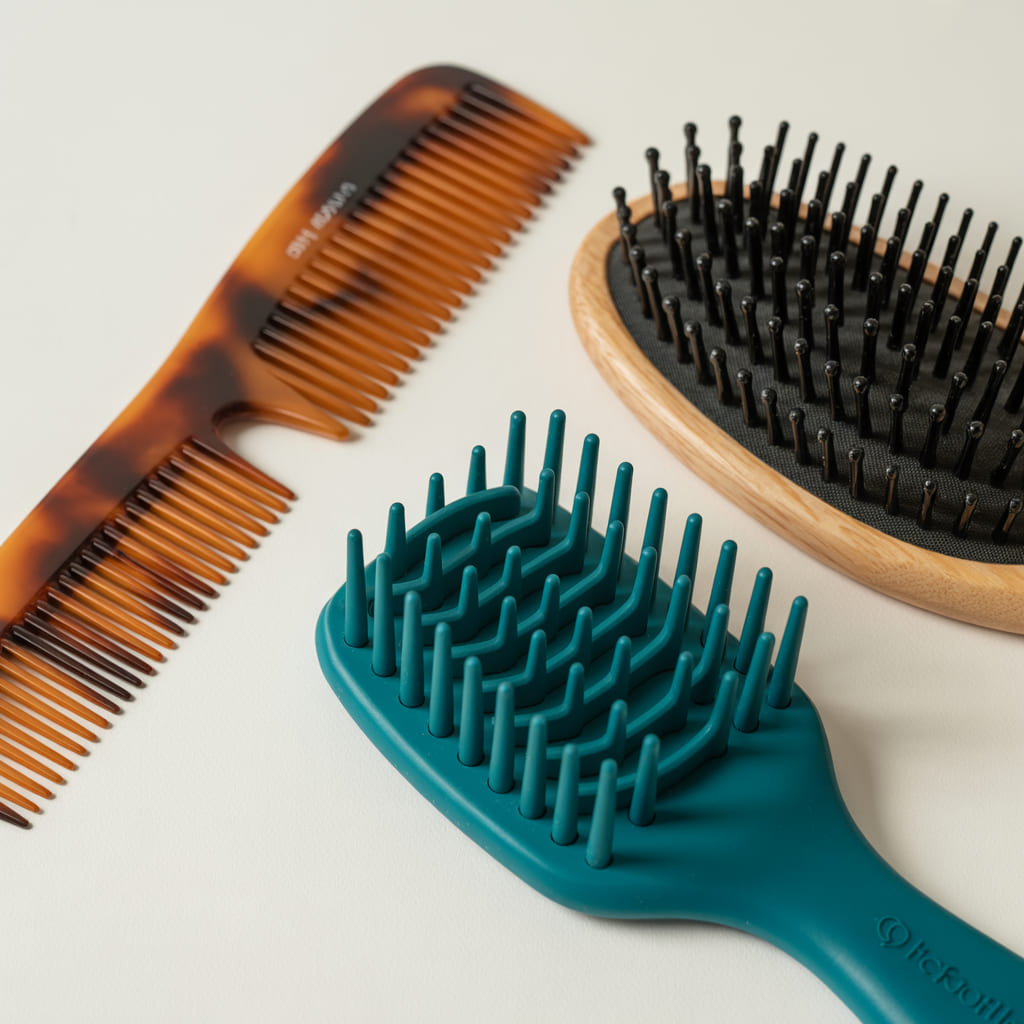
Supportive detangling tools include:
- a wide-tooth comb
- a soft-paddle brush
- a detangling brush with flexible bristles
- your own hands, especially for sensitive days
Avoid brushes with rigid bristles or sharp edges, as they can pull too aggressively on the roots and disrupt the hair’s natural movement. When the tools feel gentle in your hand, your hair naturally receives that gentleness as well.
Moving Slowly to Reduce Stress on the Hair and Mind
One of the most transformative shifts in detangling is letting your movements slow down. Rapid brushing sends shock through the strands and creates emotional urgency. Slow, steady movements bring calmness to both your hair and your internal world.
Try brushing:
- with long, smooth strokes
- at a pace that matches your breath
- while noticing the sound and feel of the brush gliding through
This slowness encourages your hair to align naturally, reduces breakage, and creates a peaceful beginning to your day. Gentle slowness is a form of self-respect.
Honoring Delicate Areas With Additional Care
Certain spots like behind the ears, at the nape of the neck, and the crown tend to gather more tangles. These areas deserve extra patience.
To soften them:
- use your fingers first
- hold the section near the roots to reduce tension
- brush with smaller, slower strokes
- pause if you feel resistance
When you treat these delicate areas gently, you reduce scalp discomfort and minimize breakage, allowing your hair to remain strong and resilient.
Finishing With Breath and Stillness
After your hair feels smooth and refreshed, close the ritual with one final slow breath. This breath seals the calmness you created and prepares you for the rest of your day.
You might:
- let your hands rest softly in your lap
- feel the weight and movement of your hair behind you
- notice the warmth lingering on your scalp
- appreciate the softness you’ve created
This simple pause becomes an emotional anchor, a reminder that calmness can be created through intentional movement.
A Closing Reflection
Gentle detangling is not just a haircare step. It is a small act of devotion, a way to begin your morning with grace instead of urgency.
When you approach your hair with softness, patience, and awareness, you invite those qualities into the rest of your day. You slow the breath, ease the body, quiet the mind, and remind yourself that beauty does not need to be rushed.