The Art of Slow Bathing That Turns Water Into a Healing Ritual
There is a particular kind of comfort that only warm water can offer, a comfort that seems to move through the body in delicate waves, asking nothing and giving everything at the same time.
I have always been drawn to the quiet magic of bathing for the way a bath creates space around the mind. When the water settles, when the air begins to soften with steam, and when the world outside finally loses its grip, something inside the body shifts.
A bath becomes less of a task and more of a return. A slow, grounding ritual that gently gathers the pieces of you that were scattered earlier in the day.
Today, I want to share the essence of slow bathing as I’ve learned to practice it, a series of soft, mindful rituals that guide you into a deeper sense of restoration.
These rituals do not rely on complexity; rather, they are shaped by presence, warmth, scent, and the gentle way water supports emotional and physical ease.
Why Slow Bathing Nurtures Both the Body and the Inner World
A slow bath allows the body to settle in ways that often feel unreachable through ordinary rest. The warm water encourages the muscles to loosen, the breath to deepen, and the mind to settle into a quieter rhythm.
When the body is held by warmth, it receives a message that it no longer needs to protect itself. It softens. It lets go. It becomes ready for restoration.
Bathing with intention adds an emotional dimension to the experience. The warmth of the water, the subtle movement of steam, and the hush that fills the room all speak to the parts of the mind that struggle with overthinking or overstimulation.
Slow bathing also brings a sense of ceremony to everyday life. It marks a transition between one part of the day and another, allowing you to release what has been heavy and welcome what feels grounding.
Preparing the Bath as a Ritual, Not a Routine
The process of preparing a slow bath can be just as restorative as the bath itself. When you approach this moment with intention rather than efficiency, the experience becomes a small ceremony of care.
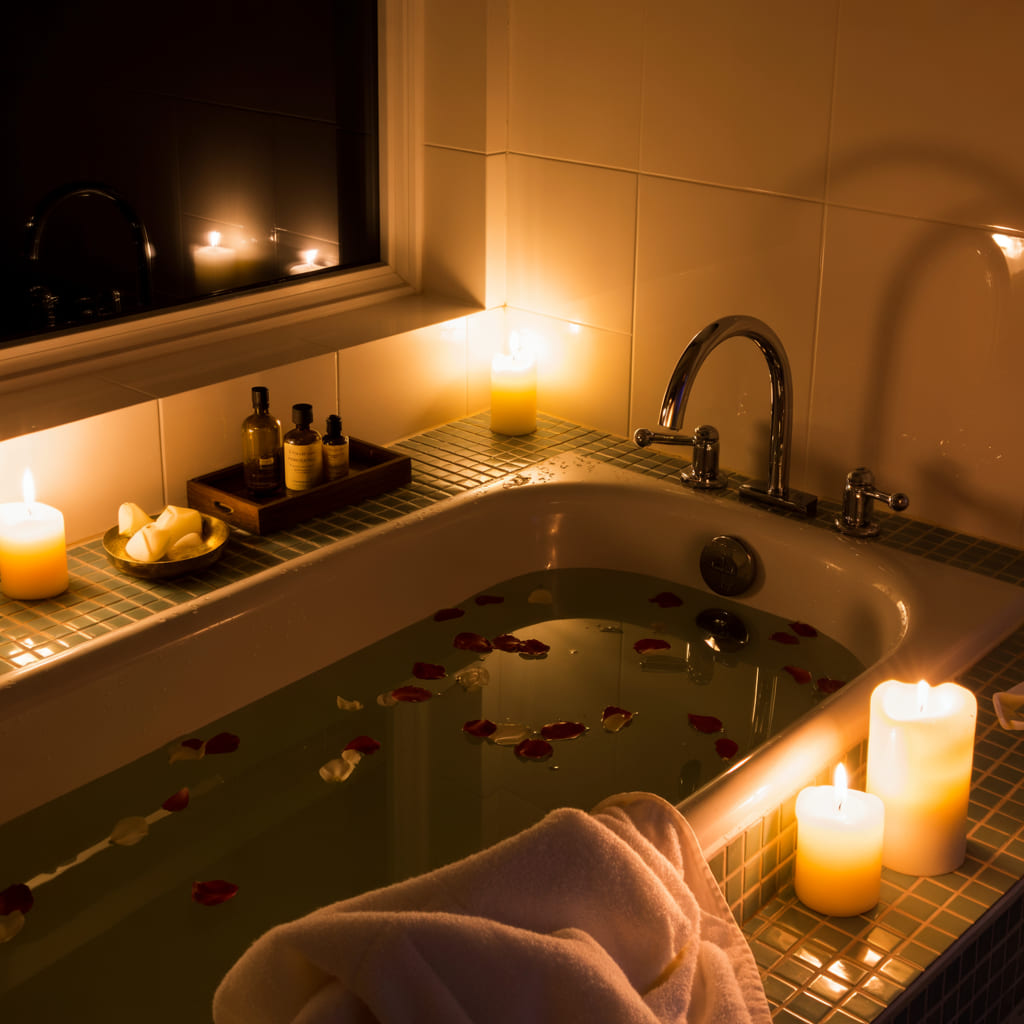
Begin by setting the atmosphere. Let the room grow warm and soft instead of bright and sharp. Dim the lights, close the door gently, and allow the space to feel safe.
As the water fills the tub, pause for a moment and listen to the sound. The steady rush of water has a calming rhythm of its own, and noticing it helps your mind settle into a slower pace. You may choose to add something to the water. Even clear water holds healing on its own.
Preparing the bath becomes a meditation of small gestures, each one reminding your body that it is about to enter a space of rest.
Incorporating Simple Ingredients for Emotional and Physical Ease
Slow bathing does not require elaborate ingredients, yet certain natural additions can enhance the sense of grounding and restoration. The key is to choose elements that feel gentle and emotionally supportive rather than stimulating or distracting.
Herbs and Flowers
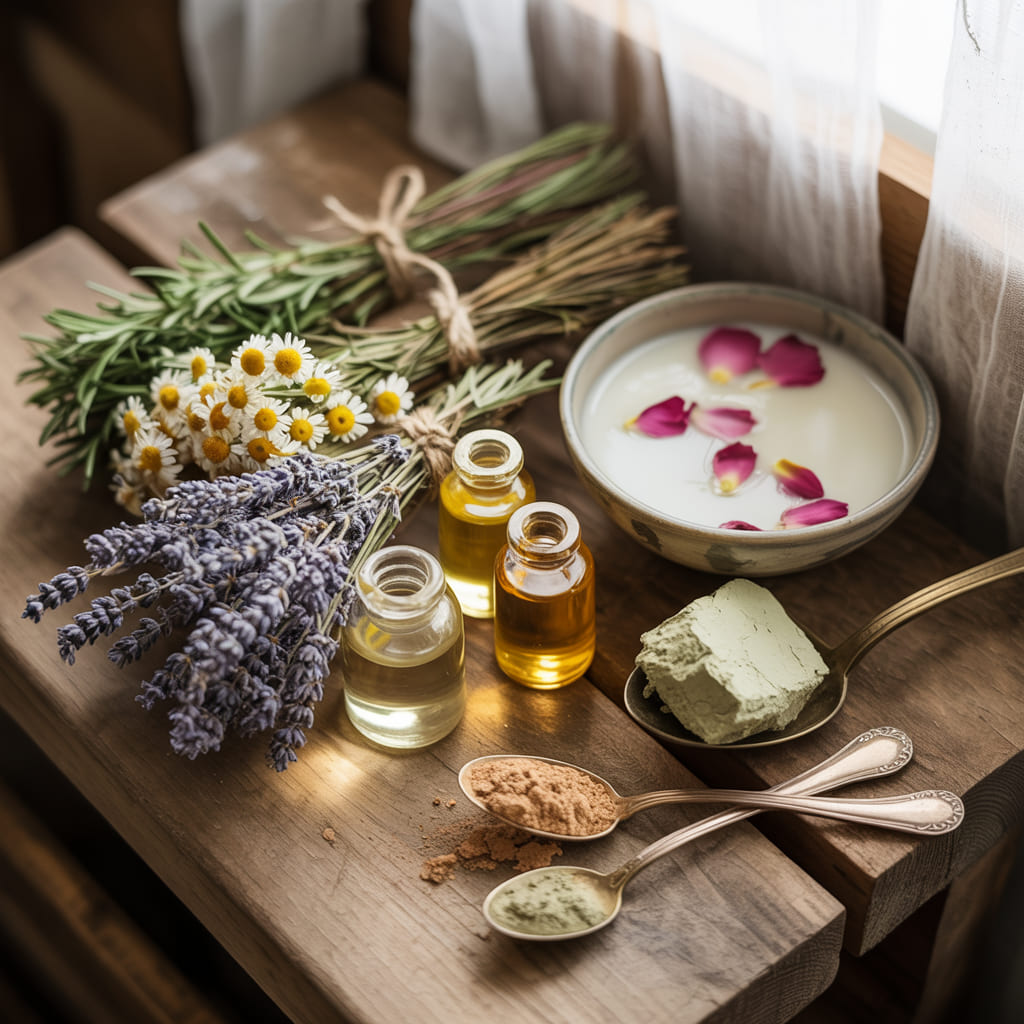
Herbs like chamomile, lavender, and rose carry a soft energy that blends beautifully with warm water. You can scatter the petals directly into the bath or steep them in a cloth pouch.
- Chamomile softens the breath and quiets the mind.
- Lavender encourages deep relaxation.
- Rose offers emotional comfort and gentle warmth.
Oils for Nourishment
Adding a teaspoon of almond oil, jojoba oil, or coconut oil helps soften the skin while adding a thin veil of nourishment to the bath. If you choose to use essential oils, keep the amount minimal, allowing the scent to remain subtle.
Milks and Clays
A spoonful of oat milk or coconut milk creates a creamy texture that feels comforting against the skin. Clay, added sparingly, can give the water a mineral richness that feels grounding and earthy.
Choose ingredients mindfully, but remember that the real healing comes from the warmth, the stillness, and the space you allow yourself.
Breathing Rituals That Deepen the Experience
Once you are settled in the bath, breathing becomes one of the most powerful tools for grounding. Warm water helps the body relax, but intentional breathing helps the mind release its grip on thought.
A few gentle approaches:
- Let your breath lengthen naturally without forcing it.
- Allow each exhale to soften the muscles around your neck and shoulders.
- Imagine the tension leaving the body as the water supports your weight.
- Breathe in warmth, breathe out heaviness.
As your breathing slows, your inner world becomes quieter. This shift is what turns a bath from a task into a deeply restorative ritual.
The Gentle Transition: Leaving the Bath Slowly
The way you leave the bath is just as important as the way you enter it. Rising too quickly can break the sense of calm you’ve cultivated, so allow yourself time to transition. Sit for a brief moment before standing, noticing how the air feels against your skin. Let the warmth linger.
Wrap yourself in a soft towel, not to scrub or rush, but to continue the sense of cocooning that began in the bath. Move into a quiet space afterward and rest for a moment before returning to the responsibilities waiting outside the room.
This pause seals the ritual, allowing the grounding energy to follow you into the rest of your day or evening.
A Closing Reflection
Slow bathing is an art that lives in small gestures and quiet awareness. It teaches you that healing does not always come through effort; sometimes it comes through softness, through warmth, through the simple act of letting water hold you.
When you permit yourself to bathe slowly, you create a refuge – a space where your body can rest deeply and your spirit can find gentle restoration.